
Racism May Be Deeper Than We Think.
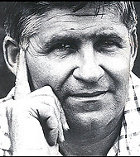
In the late 1950’s a Southern reporter was trying to come to terms with the alleged racism of the segregated south. He had interviewed city officials — white, of course — only to be told that “our nigruhs” were quite happy and well looked after.
He interviewed any blacks who would talk to him, and again was told that things were really OK in the world of Jim Crow and separate but equal. This was before the civil rights movement had fully developed, and there was a sense of denial permeating all communities involved. Unless, of course, you were black and felt free to discuss the situation with another “colored”.
Our reporter, quite white, knew that there was something wrong; at least that was what his Northern colleagues had insisted. A man of deep religious conviction, he concluded that his whiteness was making it impossible to document conditions in his part of the country.
In his journal, published as the book Black Like Me, John Howard Griffin described his reaction to seeing himself as a black man, after days of ingesting a drug designed to darken his skin. Having shaved his head to remove his finely textured hair, he took a long look at himself.
Turning off all the lights, I went into the bathroom and closed the door. I stood in the darkness before the mirror, my hand on the light switch. I forced myself to flick it on.
In the flood of light against white tile, the face and shoulders of a stranger — a fierce, bald, very dark Negro — glared at me from the glass. … The transformation was total and shocking. … The completeness of this transformation appalled me. It was unlike anything I had imagined. …
I did not like the way he looked. … For a few weeks I must be this aging, bald Negro. I must walk through a land hostile to my [new] color, hostile to my [new] skin.
Recently as I reread this book, originally published in 1960, I found this moment in John Griffin’s life to be very telling.
Griffin was not really reacting to what he was seeing, to the superficial change that had occurred. Rather what Mr. Griffin was facing was far more than “skin deep”.
He was experiencing his own racial prejudices. Intellectually, he repudiated racism. He actually put his life on the line against the advice of friends, black and white, who were convinced that he had some kind of a death wish. He had dealt with the fact that he would be vulnerable without the protection of his white skin.
What he had not anticipated was the strong negative reaction he would have to the man in the mirror. He did not want to be in the presence of this man, let alone to be this man.
To be sure, Griffin was experiencing an identity crises, which has more to do with the loss of identity than the aquisition of a new one. Still, he had become one of “them”. It was not a disguise; it was a transformation which to him spoke of “Africa … the ghetto …to fruitless struggles.”
I knew now that there is no such thing as a disguised white man, when the black won’t rub off. …[I was] a newly created Negro who must go out that door and live in a world unfamiliar to me.”
In other words, Griffin was not a white man in “black face”, some sort of caricature. As far as any white man was concerned, himself included, he had become the real thing.
In a sense more complete and dramatic that I will ever know, Griffin had stepped into another world. He was not claiming an instant black experience, although he would learn much about that in the days to follow. However at this moment of transition he had to come to terms with the unique clash of external blackness with his internal whiteness.
Within this tension, he understood that all of his white prejudices were being laid bare, as he reacted to the image in the mirror.
There is a time and place for a frank discussion of race. However, for such a discussion to be fruitful, I must look deeply into my own heart for conditioned if irrational responses, inaccurate stereotypes, and other prejudices and fears which can be manipulated by others.
Comments
Racism May Be Deeper Than We Think. — No Comments
HTML tags allowed in your comment: <a href="" title=""> <abbr title=""> <acronym title=""> <b> <blockquote cite=""> <cite> <code> <del datetime=""> <em> <i> <q cite=""> <s> <strike> <strong>